Best hybrid cameras in 2026
Whether you're shooting stills, video, or both, here's how the current hybrid mirrorless cameras stack up — ranked by our editorial value-for-money score, not just price.
By the CamTech Compare team · Updated October 2026
What makes a good hybrid camera?
A hybrid camera is one that is equally good at still photos and video. That sounds simple, but it asks a lot of a camera: fast, reliable autofocus that tracks eyes and faces for both photos and footage, in-body or lens stabilization for handheld video, good battery life, and video features such as 4K at 60 frames per second, 10-bit color and a flip-out screen for filming yourself.
Sensor size is the next decision. APS-C cameras such as the Sony ZV-E10, Canon EOS R50 and Nikon Z50II are smaller, lighter and more affordable, and their lenses are compact too. Full-frame cameras like the Sony a7 IV, Panasonic S5 II, Nikon Z6III and Canon EOS R6 Mark II gather more light, produce cleaner images at night and make backgrounds blurrier, but cost and weigh more. If you are just starting out, an APS-C kit is usually the smarter buy; if you shoot paid events, weddings or low-light work, full frame pays for itself.
How we ranked them
The list below is ordered by our editorial value-for-money score, which weighs image quality, autofocus, video capability, build and portability against the current price. A camera near the top is not necessarily the most capable; it is the one that gives you the most for what you spend. Scroll down for the high-end bodies if budget is less of a concern, and read each product page for pros, cons and who it suits best.
The rankings

Sony ZV-E10 with 16-50mm Lens (Creator Bundle)
A turnkey vlogging kit, not just a camera body.

Canon EOS R50 with 18-45mm Lens Bundle
Built for beginners, with genuinely good 4K video for the price.

Nikon D7500 DSLR with 18-140mm VR Lens
D500-grade image processing in a lighter, cheaper body.

Sony Alpha a7 III with 28-70mm Lens
Years later, still one of the best value-per-dollar full-frame bodies around.
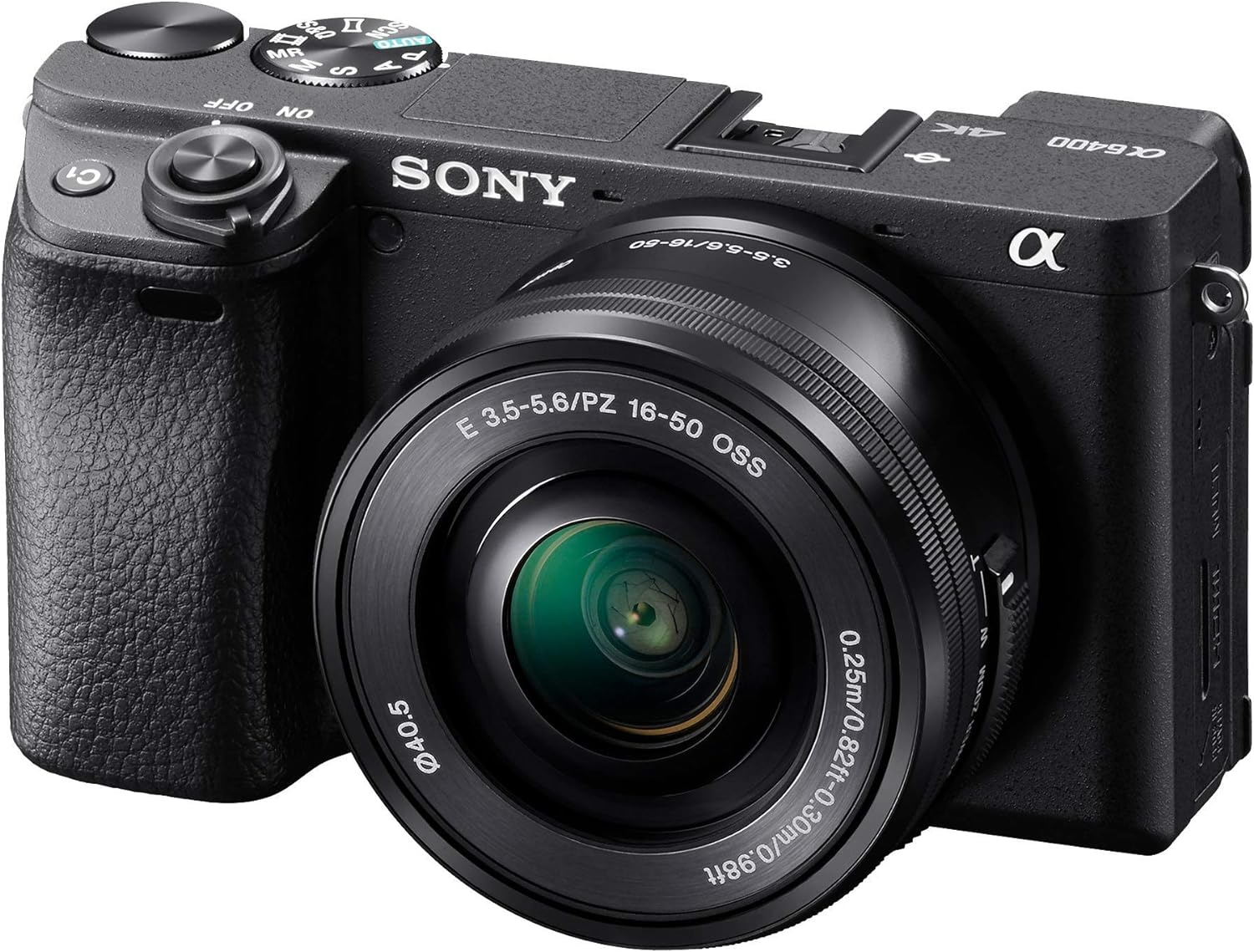
Sony Alpha a6400 with 16-50mm Lens
Real-time Eye-AF that outperforms its price point.

Nikon Z50II with 16-50mm & 50-250mm Lenses (Dual Lens Bundle)
Flagship-grade autofocus in an APS-C body, with two lenses included.

Canon EOS R10 with RF-S 18-150mm Lens Kit
Flagship-style autofocus speed at an APS-C price.

Nikon Z50 with 16-50mm & 50-250mm Lenses (Dual Lens Bundle)
A weather-sealed metal body most APS-C rivals don't offer at this price.

Sony a7 IV Full-Frame Mirrorless (Body) Bundle
The default full-frame hybrid recommendation for a reason.

Panasonic LUMIX S5 II with 20-60mm Lens Bundle
Panasonic's first full-frame body with real phase-detection autofocus.

Nikon Z6III with 24-120mm Lens Bundle
Internal 6K RAW video in a body that also shoots 20fps stills.

Panasonic LUMIX DC-TX3 (ZS300) with 24-360mm Lens Bundle
24-360mm reach in a camera that fits in a jacket pocket.

Nikon Z7 II with 24-70mm f/4 Lens Bundle
45.7MP resolution with real video chops attached.

Canon EOS R6 Mark II with RF 24-105mm f/4L Lens Bundle
40fps burst and deep-learning autofocus, with real video chops attached.

Sony RX10 V
One lens, 24-600mm, zero lens changes.
Bottom line
For most beginners and vloggers, the Sony ZV-E10 or Canon EOS R50 bundle is the easiest place to start. Enthusiasts who want room to grow should look at the Canon EOS R10 or Nikon Z50II. If you already know you need full-frame quality, the Sony a7 IV remains the safest all-round choice, while the Nikon Z6III and Panasonic S5 II are the strongest for serious video. Not sure which type of camera to choose? Read mirrorless vs DSLR and our lens guide.
Want the full spec breakdown? Open the comparator and add any two side-by-side.